
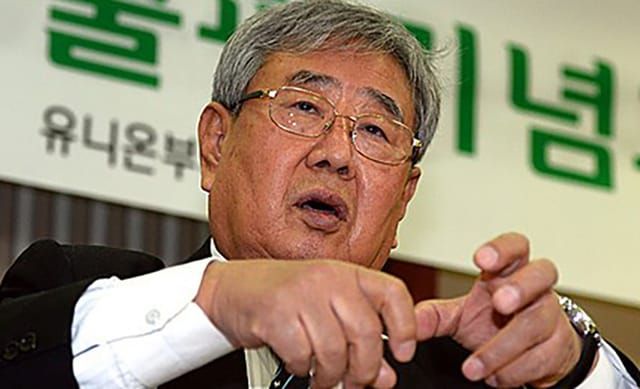
Photo: Lee Geun-an. Credit: Newsis.
On March 26, Lee Geun-an 이근안 died alone in Seoul following years of destitution and prostate cancer - an end too good for one of the most repulsive characters in modern South Korean history. Lee was the military dictatorship’s torturer in chief, and he went to his grave defending his heinous crimes.
Born in 1938 in Yangju, Gyeonggi-do Province 경기도 양주, Lee began his police career as a patrolman in 1970. He shot up the ranks from there, becoming a captain by 1984, primarily by dint of his skill at devising creative methods of torture and his cruelty in carrying them out. Turned loose against democracy activists and suspected communists, Lee waterboarded, electrocuted and crippled his victims until they confessed to whatever he wanted them to. Pulling joints - elbows, shoulders and knees - out of their socket was his signature move.
In 1985, Choi Eul-ho 최을호 was executed as a North Korean spy after having been tortured by Lee. Many more of Lee’s victims committed suicide. Kim Geun-tae 김근태, a student activist who would go on to become a three-term legislator, went the rest of his life unable to receive any dental care or surgical because of the trauma caused by a 22-day torture session at Lee’s hands in 1985, because Kim could not bear lying down on a table or a dental chair with the sound of machines whirring nearby.
Lee went into hiding after South Korea was democratized in 1987, and ultimately turned himself in. He was sentenced to seven years in prison in 1999, and purported to become a Christian pastor in 2008. But in sermons and press interviews, Lee continued to insist that he was “a patriot” who had simply engaged “in the art of interrogation.” In 2012, the Presbyterian Church in Korea 대한예수교장로회 stripped Lee of his pastorship.