
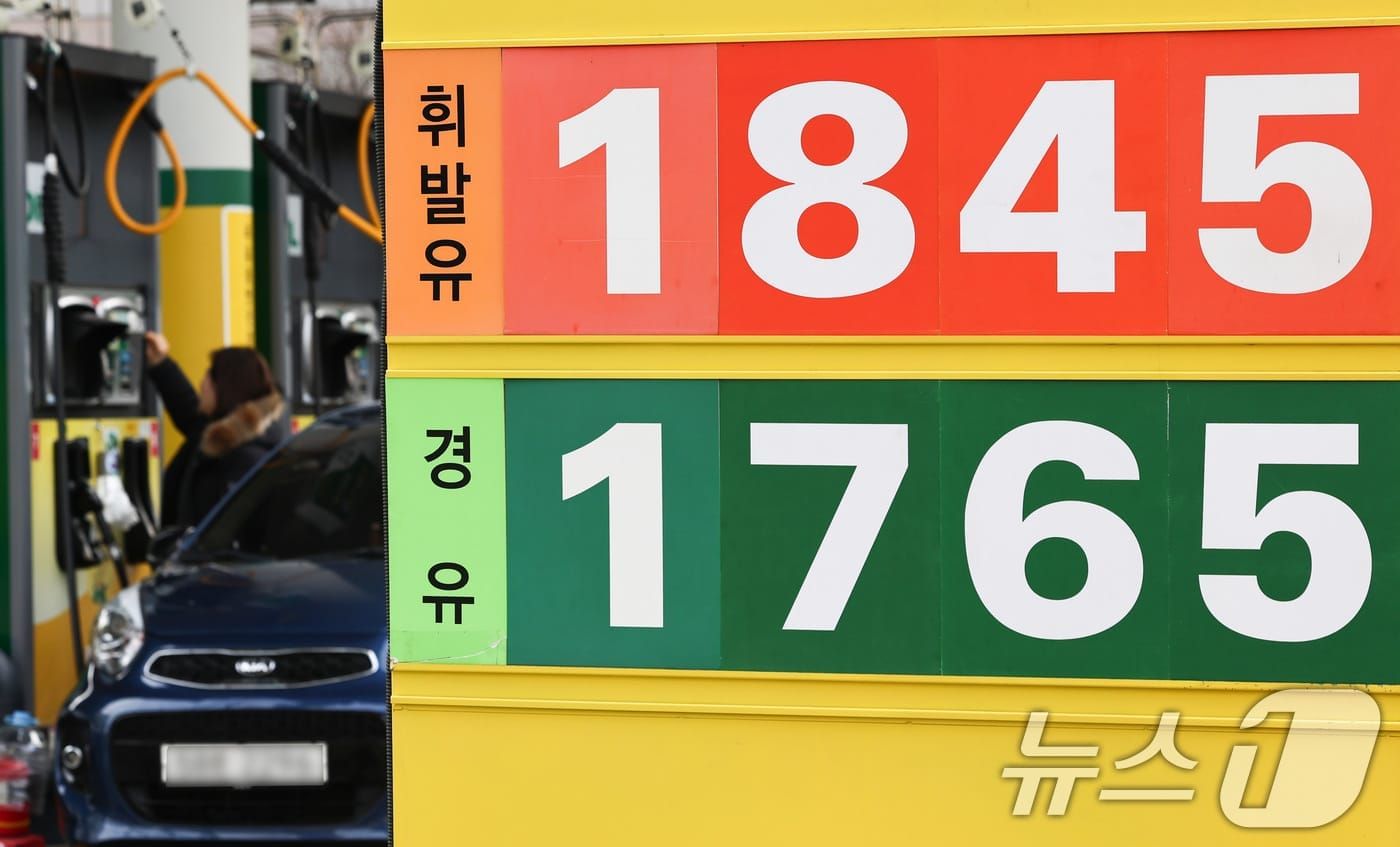
Photo: Gas station in Seoul displaying the prices for gasoline and diesel. Credit: News1.
More than 70% of South Korea’s petroleum imports, and more than 20% of its natural gas imports, travel through the Strait of Hormuz, which is now blockaded because of the US-Israel attack on Iran. The last oil tanker to travel through the strait arrived in Korea on March 20: until another tanker can pass through the strait, South Korea will be running on reserves.
For the first time since the First Gulf War in 1991, the Korean government is considering driving restrictions for passenger vehicles. On March 25, the Lee Jae-myung 이재명 administration ordered a 20% restriction on the operation of government vehicles, and encouraged the public to participate on a voluntary basis. The government has also instituted price controls on petroleum, temporarily pushing down the cost of gasoline for consumers.
Driving is not the only activity impacted. Factories manufacturing plastic bags - including the mandatory trash bags - are beginning to shut down due to being unable to procure naphtha, a petroleum byproduct used for vinyl and plastic products. The war is also disrupting the supply of helium, a byproduct of natural gas processing and a critical resource for semiconductor manufacturing.