
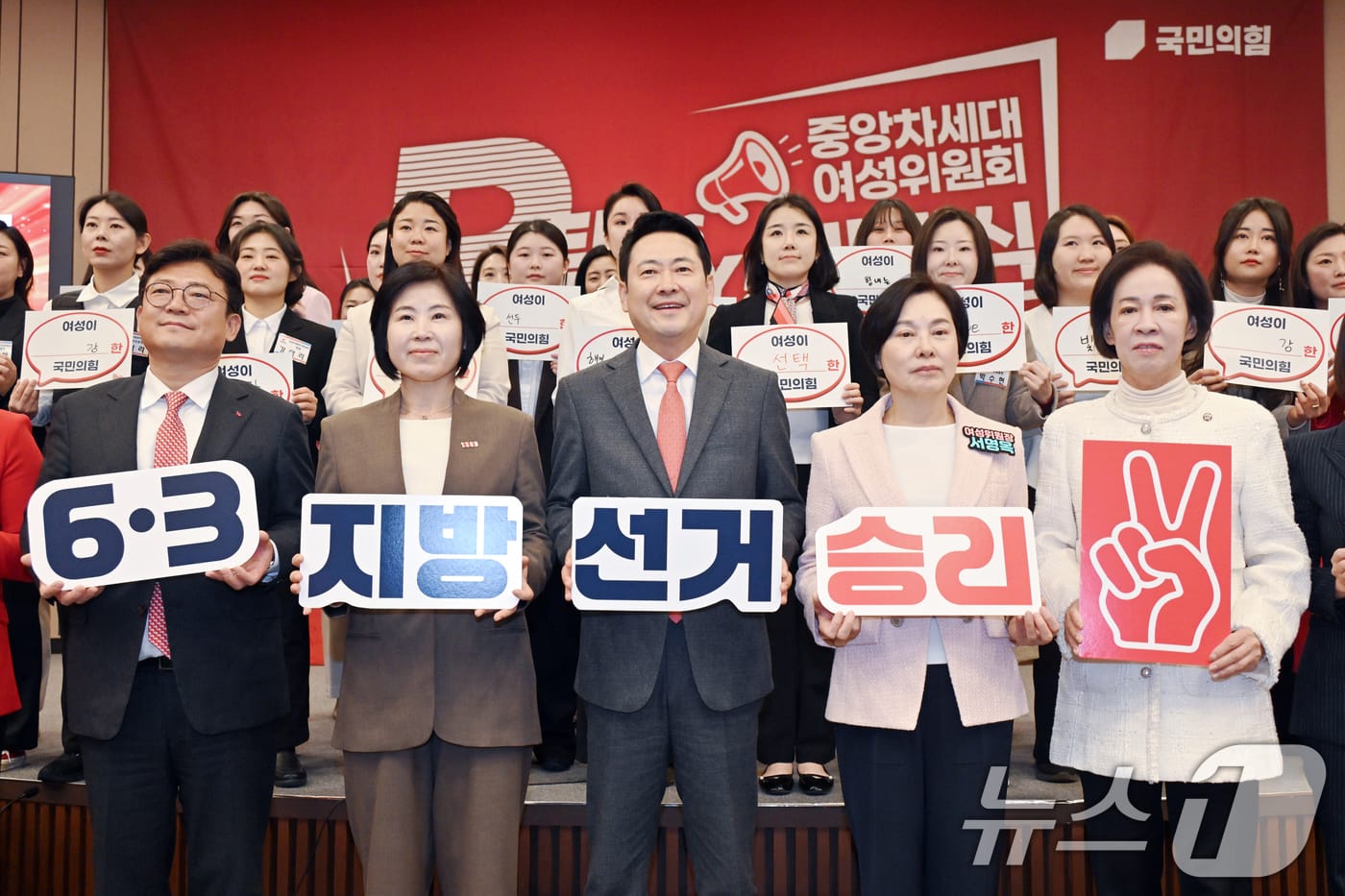
Photo: People Power Party launches the Next Generation Women's Committee for the June 3 Local Elections. Credit: People Power Party.
In the third week of March, South Korea faced collateral damage from the US-Iran War while preparing for the Local Elections.
HEADLINES
- The major parties held primaries ahead of the June 3 Local Elections 지방선거. On March 20, Assembly Member Kim Sang-uk 김상욱 won the Democratic Party 민주당 primary for Ulsan 울산 mayor. Kim, a 46-year-old freshman legislator, was previously a member of the People Power Party 국민의힘, but left the conservative party in the wake of former president Yoon Suk-yeol 윤석열’s insurrection attempt. The ruling liberal party will finalize its slate of candidates for Seoul 서울 and Gyeonggi-do Province 경기도 in early April. (See Dig Deeper below.)
The PPP’s efforts to set the slate in several key locales devolved into infighting. On March 17, incumbent Seoul mayor O Se-hun 오세훈 서울 시장 announced his decision to run for re-election, after having stated several times that he would not run unless the PPP severed ties with Yoon. Meanwhile, the party’s mayoral primary in the conservative stronghold of Daegu 대구 excluded six-term legislator and former party chairman Ju Ho-yeong 주호영 and Lee Jin-suk 이진숙, former chairwoman of the Korea Communications Commission 방송통신위원회 and favorite of the far right.
- President Lee Jae-myung 이재명 criticized an investigative journalism program over a 2018 episode suggesting he was connected to organized crime. On March 20, the producers of SBS’s Unanswered Questions 그것이 알고싶다 issued an apology for the show’s July 21, 2018 episode, which suggested - “without firm basis,” according to the apology - that Lee had connections to organized crime in Seongnam, Gyeonggi-do Province 경기도 성남, where he served as mayor.
Both the police and the Public Prosecutors’ Office conducted investigations into Lee following the broadcast, but declined to bring any charges. On March 12, the Supreme Court 대법원 found that People Power Party 국민의힘 official Jang Yeong-ha 장영하 violated the Public Elections Act 공직선거법 in 2022 by falsely claiming that Lee received bribes from organized criminals.On Twitter, Lee claimed that the Unanswered Questions episode “painted me as a mafia murderer” and demanded a follow-up episode to correct the record. SBS’s apology notwithstanding, the SBS journalists’ union responded that Lee’s demand infringed upon the freedom of the press.
- The National Assembly 국회 took final steps to abolish the Public Prosecutors’ Office 검찰청. On March 20 and 21, the legislature passed the Indictment Office Act 공소청법 and the Serious Crimes Investigations Office Act 중대범죄수사청 설치법, largely on the strength of votes from members of the ruling Democratic Party 민주당. The PPO will cease to exist in October, ending a 78-year history that dates to the beginning of the modern South Korean government.
The reform will divide the PPO’s responsibilities of investigation and prosecution between the Serious Crimes Investigations Office and the Indictment Office. The Serious Crimes Investigations Office will investigate six major categories of crimes involving corruption, national defense, insurrection, the economy, illegal drugs and cyber crimes. The Indictment Office, which will have no power to open or direct investigations, will be responsible solely for court proceedings for criminal prosecutions.
- A massive auto parts factory fire in Daejeon 대전 killed 14 and injured 60. On March 20, a fire broke out at a factory for Anjun Industries 안전공업, an engine valve manufacturer. There have been seven other fire incidents at the same plant over the past 15 years, largely due to improper handling of lubricants and flammable debris inside air ducts and pipes.
The factory also built a workers’ rest area that failed to meet fire code requirements, making it difficult for laborers to escape after the fire broke out. The fire was the deadliest industrial disaster since June 2024, when a lithium-ion battery factory fire in Hwaseong, Gyeonggi-do Province 경기도 화성 killed 23 workers.
DIG DEEPER
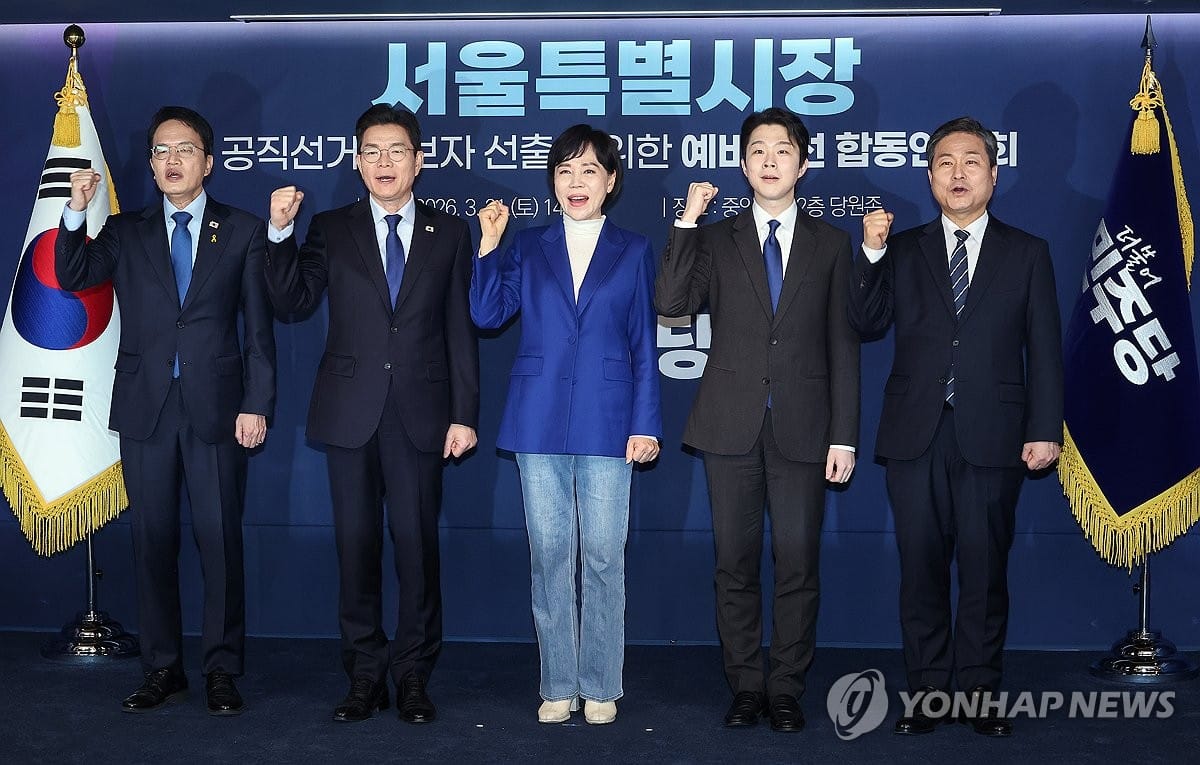
Photo: Democratic candidates for Seoul mayoral race primary pose before a joint rally. Credit: Yonhap News.
2026 Local Elections Watchers’ Guide
On June 3, South Korea will hold its first national election since Lee Jae-myung 이재명 won the 2025 presidential election. The Local Elections 지방선거 will select the governors and mayors of provinces and major cities, as well as local legislators, city councilmembers and school district superintendents. The 2026 Local Elections will introduce the new Jeonnam-Gwangju Integrated Special City 전남광주통합특별시, which merges the Gwangju mayor’s office and Jeollanam-do Province governor’s office into a single entity.
Can the People Power Party Survive? The last Local Elections, held just one month into the Yoon Suk-yeol 윤석열 presidency in 2022, were a wipeout for liberals, who managed to hold onto only five out of 17 major cities and provinces. But in the wake of the former president’s self-coup attempt and the failure of his administration, the tables have turned decisively. Conservatives have struggled to distance themselves from the insurrectionist, while Lee’s popularity remains solidly in the mid- to upper 60s.
In this week’s Gallup Korea poll, the Democratic Party 민주당 is favored in all major locales except for the ruby-red Daegu 대구 and Gyeongsangbuk-do Province 경상북도. With former prime minister 국무총리 and local legislator Kim Bu-gyeom 김부겸 running in the Daegu mayoral race, the ruling liberal party hopes to take 15 out of 16 top elected offices for major jurisdictions.
Meanwhile, the People Power Party 국민의힘 is having difficulty even fielding candidates. As of March 19, the Democratic Party had registered 98 candidates for the 101 city council districts in Seoul; the PPP, only 30. Although the PPP issued a statement on March 9 opposing Yoon’s return to politics, infighting between pro-Yoon and anti-Yoon factions has continued unabated.
On March 22, the PPP excluded veteran politicos Ju Ho-yeong 주호영 and Lee Jin-suk 이진숙 from the Daegu mayoral primary. This was a bid to declare a truce in the civil war between moderates and hardliners - but it also had the effect of taking out the two frontrunners for Daegu, potentially opening the door for a victory by former prime minister Kim.
Seoul Blue Wave Sweeping Incumbent. In the wake of a previous low point - the impeachment and removal of Park Geun-hye 박근혜 - conservatives began clawing their way back to power with the 2021 by-election for Seoul mayor, which O Se-hun 오세훈 won by pandering to grievances over the rising costs of housing and property taxes. With Yoon’s election in 2022, it looked as if O was next in line for the presidency. (See previous coverage, “Seoul’s Old New Mayor.”)
Just a few years later, O is likely walking into a buzzsaw. A March 11 poll by Flower Research 여론조사 꽃 found that the Seoul mayoral race is a toss-up between the two Democratic candidates - Jeong Won-o, former head of Seoul’s Seongdong-du District 정원오 전 성동구청장, and Park Ju-min 박주민, a three-term legislator - while O trails both by double digits.
Sensing his fate, O dragged his feet on running for re-election, initially demanding that the PPP first renounce its ties with Yoon. O has since registered his candidacy, but opposition from far-right election deniers means he may not survive the primary. If O manages to eke out a primary victory before losing in the general election, he could attempt to leverage the defeat into moderating the PPP’s right wing tendencies.
Liberal Intrigue in Gyeonggi-do. Infighting: it’s not just for conservatives. Though less heated than their counterparts in the PPP, the Democrats have a high-profile intra-party competition of their own in the for the governorship of Gyeonggi-do Province, where nearly 30% of all South Koreans live. Four years ago, former Finance Minister Kim Dong-yeon 김동연 전 재정경제부 장관 edged out the PPP’s Kim Eun-hye 김은혜 by fewer than 9k votes, becoming the lone bright spot in the liberal wipeout.
But Kim’s reputation as a moderate technocrat may now be working against him. His Democratic primary challengers, veteran legislator Chu Mi-ae 추미애 and Lee Jae-myung ally Han Jun-ho 한준호, have criticized him for not being sufficiently supportive of the president. Kim has made efforts to assuage critics, apologizing for “becoming arrogant after [his] dramatic election win” and “not showing enough camaraderie” to Lee’s camp.
Outsiders Making Noise? The Rebuilding Korea Party 조국혁신당 was mere inches away from joining the Democratic Party when merger talks fell apart. (See previous coverage, “Dem-RKP Merger?”) With its hopes of joining the larger party dashed, the minor progressive party has fielded only 16 candidates so far, all for offices in small cities and at the county level. RKP leader Cho Kuk 조국, a former Justice Minister 법무부장관 who remains popular among liberals, may decide to run in a major race, potentially splitting liberal votes with the Democratic candidate. Cho said he will make his decision by early April.
On the other side of the aisle, former PPP leader Han Dong-hun 한동훈 is also weighing a run after having been ousted from his party for opposing Yoon’s insurrection. Rather than running for governor or mayor, Han is likely to run in a by-election for a National Assembly seat vacated by a legislator running in the Local Elections. Possible districts for Han include Busan Buk-gu A 부산 북구 갑, Seoul Gangnam B 서울 강남 을 and Daegu Suseong A 대구 수성 갑.
WEEKLY POLLS
In the third week of March, President Lee Jae-myung 이재명’s approval rating in the weekly Gallup Korea poll was 67% (+1). Lee’s approval rating in the weekly RealMeter poll was 62.2% (+1.9). The president’s approval rating has been on the upswing over the past several weeks, likely reflecting the “rally around the flag” effect as the US-Iran War drags on.
The approval rating for the ruling Democratic Party was 46% (-1), while approval for the opposing People Power Party was 20% (no change) in the weekly Gallup Korea poll. The Rebuilding Korea Party earned 3% (no change) support in the Gallup Korea poll; the New Reform Party, 2% (no change). In the RealMeter poll, the approval rating for the ruling Democratic Party stood at 53.0% (+2.5), while approval for the opposing People Power Party was 28.1% (-3.8). Approval for the Rebuilding Korea Party was 3.0% (+0.4), and approval for the New Reform Party was 4.0% (+1.2) in the RealMeter poll.
Data of the Week: Most Oppose Sending Troops to Strait of Hormuz. United States president Donald Trump has demanded that South Korea send its navy to the Strait of Hormuz to secure the critical shipping channel for petroleum, but the Korean public is decidedly unenthusiastic. In a recent survey by Gallup Korea 한국갤럽, 55% opposed sending troops; in a RealMeter 리얼미터 poll, 60.9% opposed.
BUSINESS AND TECHNOLOGY
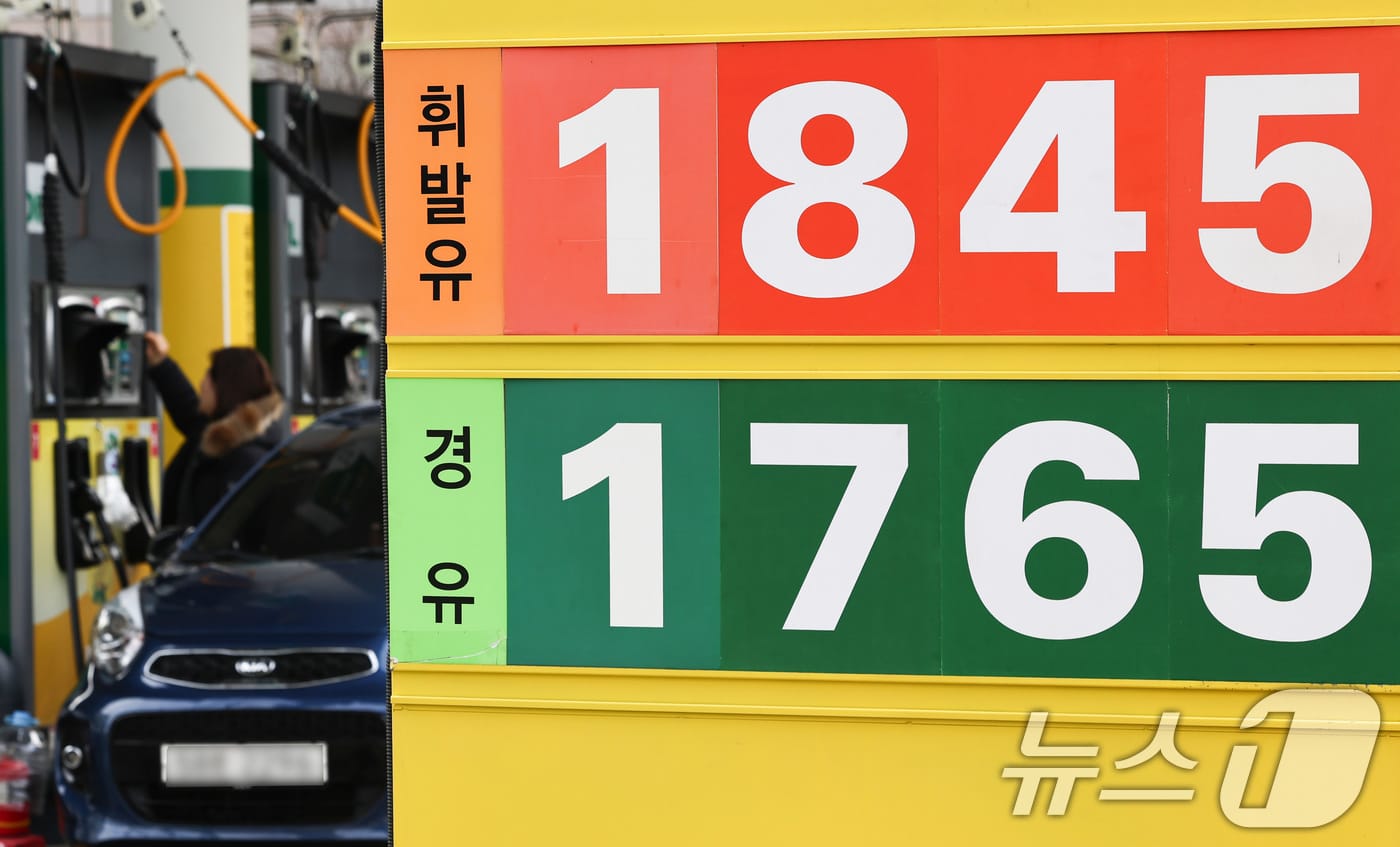
Photo: Gas station in Seoul displaying the prices for gasoline and diesel. Credit: News1.
Iran War Energy Crisis Hits Korea. More than 70% of South Korea’s petroleum imports, and more than 20% of its natural gas imports, travel through the Strait of Hormuz, which is now blockaded because of the US-Israel attack on Iran. The last oil tanker to travel through the strait arrived in Korea on March 20: until another tanker can pass through the strait, South Korea will be running on reserves.
For the first time since the First Gulf War in 1991, the Korean government is considering driving restrictions for passenger vehicles. On March 25, the Lee Jae-myung 이재명 administration ordered a 20% restriction on the operation of government vehicles, and encouraged the public to participate on a voluntary basis. The government has also instituted price controls on petroleum, temporarily pushing down the cost of gasoline for consumers.
Driving is not the only activity impacted. Factories manufacturing plastic bags - including the mandatory trash bags - are beginning to shut down due to being unable to procure naphtha, a petroleum byproduct used for vinyl and plastic products. The war is also disrupting the supply of helium, a byproduct of natural gas processing and a critical resource for semiconductor manufacturing.
BUZZ OF THE WEEK
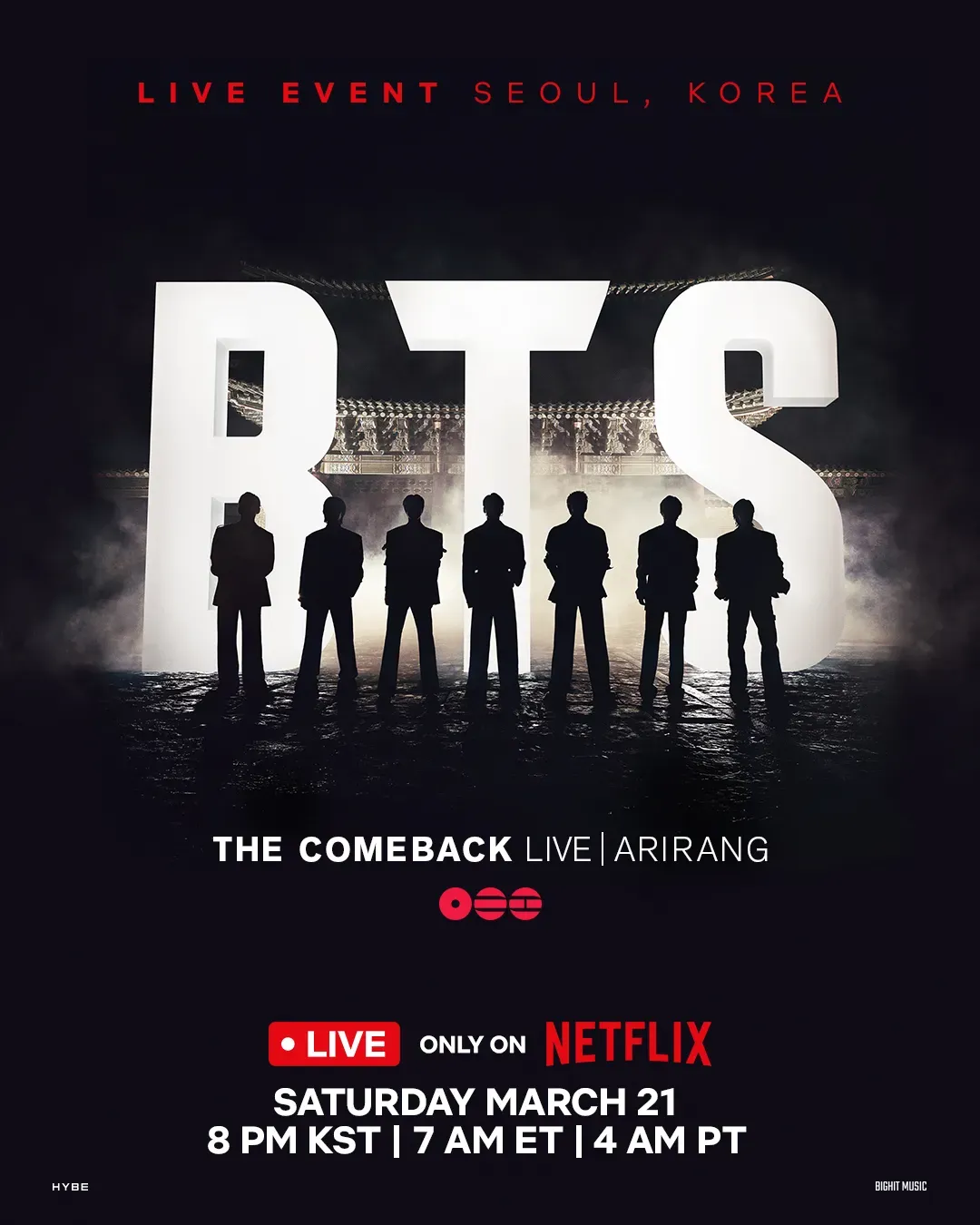
BTS Comes Back to Mixed Reviews. On March 21, the world’s most popular band staged a comeback performance in Seoul after all seven members of BTS 방탄소년단 completed their mandatory military service. BTS Comeback Live: Arirang was televised live via Netflix, immediately becoming the most viewed Netflix telecast in 77 countries. The septet’s fifth album Arirang sold nearly 4m copies on the day of its release, and all fourteen of its tracks were among the top globally streamed songs on Spotify.
But the comeback was not all roses. The band’s takeover of Gwanghwamun Square 광화문 광장 provoked grumbling after crowd controls - a precaution after the tragic Itaewon Disaster of October 2022 - all but shut down Seoul’s business center. Though police initially expected crowds of 260k, actual attendance was approximately 104k, drawing complaints that the extensive crowd controls had been unnecessary.
BTS’s new album debuted to generally positive reviews, but critics were quick to note that K-pop’s greatest product is now “too big to fail.” With band members now mostly in their early 30s and developing distinctive careers of their own as solo artists, the album may be lacking in the cohesive, unifying narrative that made the group one of the biggest artists of the 21st century. None of that will stop BTS from kicking off the biggest concert series since Taylow Swift’s Eras tour, as they embark on a global tour on April 9, 2026 and through March 2027.
THAT’S IT FOR THE THIRD WEEK OF MARCH. SEE YOU NEXT WEEK.
We welcome your feedback! Contact us at admin@blueroofpolitics.com.
Like TBR Newsletter? Don’t keep it to yourself. Friends and colleagues can sign up here.